
The compute pod
An enclosed cabinet of professional GPUs, owned and managed by Lorafield. The concept is a small multi-GPU installation, not a spare computer you need to maintain.
How it works
A compact compute pod runs suitable paid workloads. Our proposed pilot shares value with hosts through completely free home EV charging on an agreed connection schedule.*
Pilot in development
Territories and installation dates have not been announced.
*Proposed pilot. Free home charging depends on following the agreed connection schedule. See the full proposed offer.
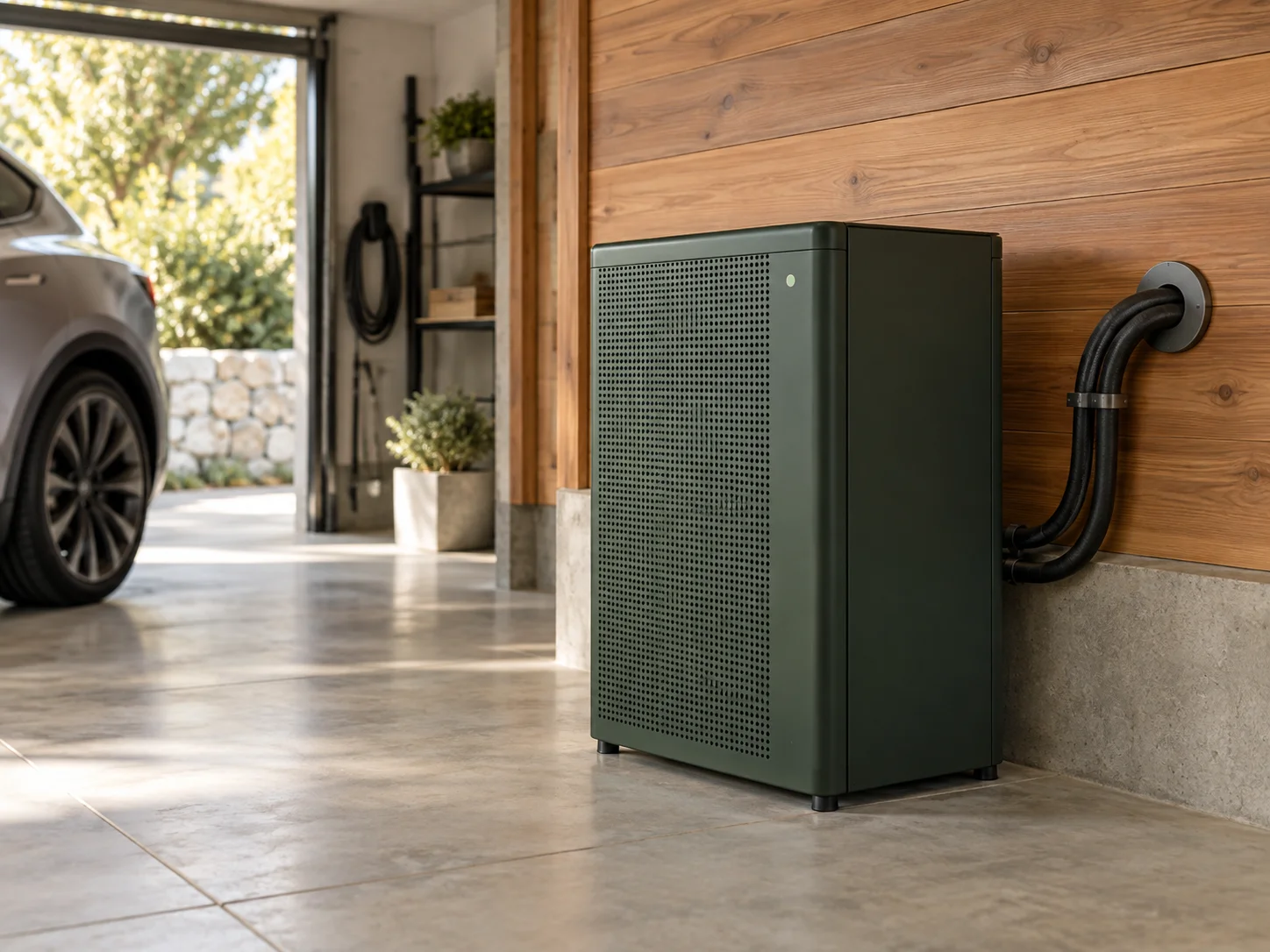
Meet the equipment
A GPU is a processor built for parallel work. Businesses rent that computing power for suitable AI inference and rendering tasks.
An enclosed cabinet of professional GPUs, owned and managed by Lorafield. The concept is a small multi-GPU installation, not a spare computer you need to maintain.
The pod is sized to the home, the cooling design, and the workload. Higher-memory GPUs can require more power; a qualified electrical review confirms the full system load and approved operating limits. We cover the pod’s metered electricity.
A separate company-managed network connects the pod to its workloads. Lorafield pays for approved pod fiber service; your existing household internet bill remains separate.
GPUs produce heat and fan noise. The design must address heat rejection outdoors, ventilation, clearances, and acoustic suitability before installation.
Final hardware, dimensions, sound levels, and operating conditions are part of the site proposal. The photographs illustrate the concept.
From first hello to first charge
No guesswork about what goes in your garage. Every home starts with a qualification process and a written agreement.
Tell us about your EV, garage, and location. We assess usable space, household demand, service capacity, fiber availability, and whether the local network can support the installation.
We define equipment placement, cooling, clearances, noise expectations, electrical work, service access, and any separately priced upgrades. You review the host agreement and charging benefit before signing.
The proposed installation includes a company-owned GPU pod, dedicated electrical connection, metering, cooling, and managed fiber. We assess your EV and bidirectional charger for V2G, confirm applicable approvals, and identify any equipment or installation costs in the proposal.
The installation is checked before operation. We confirm the agreed limits, monitoring, connectivity, and charging schedule, including the departure time and charge level you need.
Lorafield manages the hardware and suitable paid workloads. You provide the agreed space, access, and connected availability. Follow the agreed connection schedule to receive completely free home charging. V2G dispatch stays within the agreed charge and departure requirements.
How the value comes together
Businesses pay for useful GPU time. Revenue must cover equipment, electricity, cooling, fiber, service, and replacement—along with the host benefit.
Approved vehicle-to-grid services can add value by sharing stored EV energy with the grid. The pilot will validate compute demand, energy-service value, and the full cost of delivering the host offer.
Your side of the exchange
V2G participation rules for the pilot have not been published. Before offering you a place, we will confirm whether your configuration requires V2G, your vehicle and charger compatibility, applicable approvals, and any equipment costs.
See the full offerDesigned around the whole home
Compute, managed charging, and V2G work around your home and driving needs. Home backup can follow where the site supports it.
Managed charging coordinates your agreed departure time and target charge with household demand and operating limits. Availability commitments and override rules are set out before enrollment.
Home backup needs its own design, isolation equipment, and controls, even when your EV supports V2G. We can assess it as an additional option. The pod itself does not supply backup power.
Have a little room?